For a Renaissance of the United Nations
Appeal – petition
Till the war-drum throbb’d no longer, and the battle-flags were furl’d
In the Parliament of man, the Federation of the world.
Alfred, Lord Tennyson
Fellow citizens of the world, I appeal to all of us.
At a time when humanity is facing, in the Anthropocene era, that is to say as a result of our own actions, a crisis unprecedented in our entire History; a holistic crisis – all in one political, economic, social, health-related, ecological, energetic, military and… moral – which threatens our very existence and that of all life on Earth; whilst the UN is weaker than ever, a star reduced to a mere extra and observer in the midst of the Great Game, the United Nations Organisation is also more important than ever in overcoming this critical moment; and if multilateralism is dying, it is that omnilateralism must be!
This organisation, founded in 1945, on the ruins of the Second World War and its trail of horrors hitherto unknown, under the banner – following the “War to End All Wars” of 1914-18 and the failure of the League of Nations – of “never again”, in order to finally set us on the right path, that of peace, justice and well-being, in a protected environment, on a global scale, admittedly, despite so many clear-cut successes, we will hear it repeated time and again that it has failed in its purpose, that it is powerless, therefore useless. Not without striving, however, to reflect, to respond and, as far as possible, to make reason heard, as if to someone blaming medicine of not curing us of death.
For the UN’s (dire) situation is nothing more than the sum of the good (and bad) will of the states that make it up. It is the faithful mirror, magnifying, of our world. And those of our leaders who denigrate it the most, claiming that it is only a tool for losers and that it is too costly – when the budget of the entire United Nations System (ICJ, WHO, UNICEF, UNESCO, FAO, UNCH, IMF, UNDP, etc.) amounts to less than one-hundredth of global military spending –, those are the ones primarily guilty for such a weakening, seeking quite simply to annihilate and replace it with some ad hoc fantasy structure, serving exclusively chauvinistic, private and personal interests.
But let no one be fooled by the merchants of “alternative facts”. Just as the so undeniable climate change and collapse of biodiversity, growing inequality and hunger, pandemics and wars, an incident or, a fortiori, a nuclear conflict, know no borders (much like an artificial superintelligence that would turn treacherous), similarly, the management of ongoing or potential planetary disasters – not to mention the achievement of the Sustainable Development Goals whose horizon is constantly receding – requires global coordination for which only the UN is capable of providing the framework. The United Nations is, therefore, truly irreplaceable. And to the question “more UN or no more UN?”, the answer must be, without hesitation: more! This in no way meaning, when nations are more disunited than ever by the harms of the prevailing nationalist-populism, whilst peoples, like individuals, only gain by loving one another in all their complementary differences, this in no way meaning, indeed, that the United Nations is not in need and capable of improvement (and even… extremely so). This implying, on the contrary, that it is imperative to devote ourselves to this improvement, urgently and with all our strength.
If the United Nations has only the means it is given, it is certainly necessary to provide it with far more, both in terms of quantity and quality, since it is the very heart of international cooperation, indispensable to our collective survival and well-being. Restoring or rather finally granting it what it deserves, for our common good, is therefore vital. But given the scale of the deficit, this cannot happen without a wake-up call followed by a far-reaching reform of the UN, which is first and foremost that of the spirit of the nations and their decision-makers, based on a global and democratic federalism: a true Renaissance.
The main features of this reform and this new United Nations Federation – announcing not the end of nations, but their full blooming in concert – are as follows:
• A transmutation of the United Nations, which would evolve from an international organisation with an essentially advisory role into a supranational federal state where three authorities coexist: legislative authority (law-making by a World Parliament), executive authority (enforcement of the law by a Federal Government) and judicial authority (oversight and sanctions in the event of non-compliance with the law by the International Court of Justice).
• Free and inclusive membership: by definition, the federal state must be open to all states (the federated states) of the world, which are supposed to represent all peoples and nations, whilst respecting the right to self-determination.
• Shared sovereignty between the federal state and the federated states of the United Nations, in accordance with the principle of subsidiarity: the burden of a public action should be borne by the smallest entity in order to be as fair and effective as possible, whilst respecting and promoting the distinctive characteristics of each locality and its inhabitants ; this is how the various powers will be allocated across the different levels; if and only if one of them, nation state for example, is unable to perform a task in the best interests of the public, then it is the higher level, World Federation in this case (or, where applicable, integrated regional body), that will take it on.
• The formation or consolidation of regional entities based on the federal model, provided that they do not become an end in themselves or risk crystallising into antagonistic blocs, but rather contribute to the most effective possible, integrated, functioning of the United Nations.
• The tripartite structure of power within the United Nations – particularly regarding decision-making – must be as equitable as possible for all its members and their respective citizens, following the rule: every human being equals one vote.
• Strengthening partnerships and the advisory role of civil society and the business sector with and within the United Nations, with a view to advancing social co-responsibility.
• The direct application of global law to individuals, regardless of their identity or place of residence, within the jurisdiction of the world federal state: safeguarding human rights and combating any threat to the security of the United Nations.
• In terms of security: the creation of international armed forces capable of ensuring the security of all the federated states and the federal state itself; the voluntary disarmament of the federated states – following the historical example of Costa Rica inter alia – to a level commensurate with their only needs for maintaining internal order (police and other security services); the dismantling and prevention of Weapons of Mass Destruction (nuclear, radiological, chemical, biological and technological arsenals); acquisition of the best tools for the management of natural and technological risks, both infra-atmospheric and extra-atmospheric (satellites, near-Earth objects, etc.).
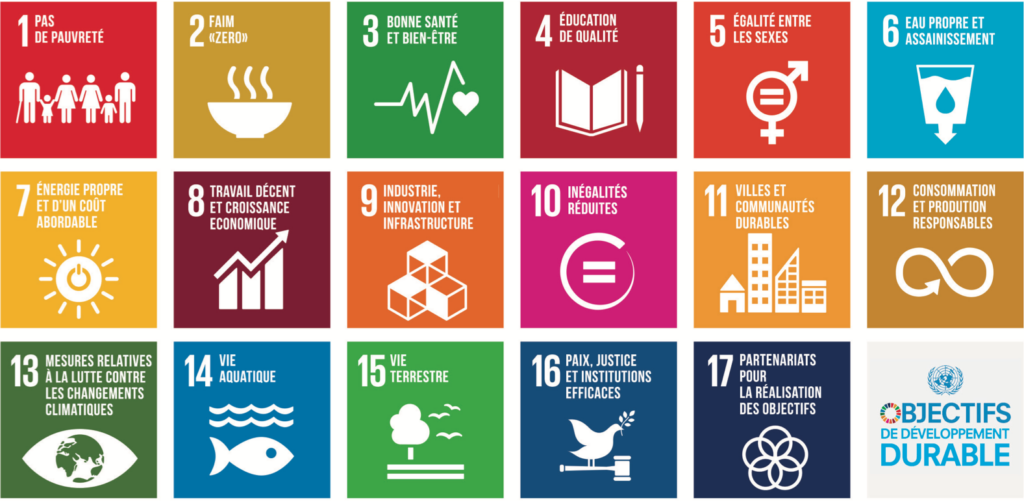
• In the field of development and environment: mobilising sufficient resources – financial, human and technical, the requirements being colossal – to achieve the seventeen Sustainable Development Goals (or SDG’s) plus an eighteenth: Culture for All, so that all forms of life may coexist on Earth, our “common home”, in harmony.
Dominated by the “logic of empires” which they regard, if not as preferable, then at least as inevitable, some will dismiss this world federalism, the seeds of which the UN yet carries within from the start, as naive; placing on the same bench of the “dreamers” as my humble person and many others: Albert Einstein, Winston Churchill, Albert Camus, Pope John XXIII, Thomas Mann, Bertrand Russell, Jawaharlal Nehru, Margaret Mead, Hideki Yukawa, Martin Luther King, John Fitzgerald Kennedy, Irène and Frédéric Joliot-Curie, Léopold Sédar Senghor, José Figueres Ferrer, Hannah Arendt, Willy Brandt, Peter Ustinov, Desmond Tutu, Yehudi Menuhin, Mikhail Gorbatchev, Jürgen Habermas and Edgar Morin; when such a list (by no means exhaustive) of so eminent and diverse heralds of this idea is plenty enough to refute any suggestion of excessive innocence and bestow upon it a label of lucidity. It is true that all these illustrious visionaries, as cosmopolitan as they were champions of their own “homelands” (country, art, science, faith), have this “advantage” over so many of our so-called “realist” contemporaries, an advantage which is certainly also a terrible woe, that of having witnessed first-hand those events so illuminating in their unfathomable darkness: Nazism, the Shoah-Holocaust, Hiroshima & Nagasaki, Stalinism — all this probably explaining that. But what? Our own misfortunes, in this first half of the 21st century, are by no means trifles! Have we, then, to such an extent, lost not only our memory, but also our sight and other senses? Incapable of making the connection between the past, the present, the future, and to react?
When these words, so topical, were written in 1947 and 1948 respectively:
“As I see it, this is the way for the nations of the world to break the vicious circle which threatens the continued existence of mankind, as no other situation in human history has ever done. […] The United Nations must act with utmost speed to create the necessary conditions for international security by laying the foundations for a real world government.” / Albert Einstein, Open letter to the General Assembly of the United Nations
“All human beings are born free in dignity and rights. They are endowed with reason and conscience and should act towards one another in a spirit of brotherhood.” / United Nations, Universal Declaration of Human Rights – Article 1
Who could have thought that by 2026 we would be in this state, even less brotherly and much closer to the chasm than we were back then? The pessimists.
The same goes for us today… Who can imagine that humanity will survive until 2100 without a major shift, for which our wisest elders have provided us with the keys and the impetus? The optimists.
Undoubtedly, such a vision of progress of the United Nations will on its way come across inertia and opponents from all quarters: from irresponsible politicians to almighty lobbies, so anxious about the future… of their power and profits alone, not to mention the sheer laziness of both body and soul. Convincing shall be – it is an understatement – difficult. Yet do we even have a choice? Shall we allow our boat to drift on towards the abyssal maelstrom, doing nothing, even though we have oars and arms? Short sight to prevail over the long, brute force to triumph over law, when we are “endowed with reason and conscience”? No.
So, take heart, fellow citizens of the world, let’s get moving all together! For the fight for the United Nations is a sacred cause: that of – before a Flood with none survivance – the dove, the olive branch and the rainbow. So that all the children of the Earth may at last live in peace, for eternity, on a planet restored – after this battlefield – to a garden.
Kim Rebholz Ratisbonne, 9 June 2026
Sign the online petition on the change.org platform, and on AVAAZ.org